Headgear is the most misunderstood piece of equipment in boxing. It does some things very well. It does other things worse than the marketing tells you. And the right headgear depends almost entirely on a question most buyers do not ask first.
Let's start there.
Step 1. What are you actually buying for?
Before silhouettes, before brands, before foam densities, answer this:
| Use case | What you need |
|---|---|
| Gym sparring only | Training headgear: any silhouette, any approval. |
| USA Boxing Youth, Junior, or Women's competition | USA Boxing-approved mandatory headgear. |
| USA Boxing Elite Men competition | None. Headgear is not allowed. |
| USA Boxing Masters (35+) | Masters-specific approved headgear, 16 oz. |
| World Boxing / international amateur | World Boxing-approved headgear. |
If you are competing, this matters. USA Boxing Elite Men competitions no longer permit headgear, while Youth and Junior competitions for both men and women require it. Masters Division headgear is its own category: 16 oz, with only a few certified manufacturers, and only gear with the Masters-approved tag is permitted. A general “USA Boxing-approved” headgear will not get you through Masters check-in.
If you are only sparring at the gym, none of the certifications matter. Buy for fit and feel.
Step 2. What headgear actually does and does not do
This is where most guides oversimplify. The honest version, based on the research:
Headgear is excellent at preventing cuts, lacerations, and superficial facial injuries. It reduces orbital fractures and broken noses. A 2022 systematic review of 39 studies concluded that headguards protect well against lacerations and skull fractures.
Headgear is partially effective, and the science is genuinely contested, at preventing concussions and traumatic brain injury. The same review found that the evidence on concussion prevention is largely indirect and based on observational studies with small samples, not randomized trials. A 2018 mechanical study of 12 commercial headguards found that softer foams absorb low-energy impacts well but flatten under hard shots, while harder foams reduce that flattening but introduce secondary acceleration peaks and reduce comfort. The conclusion was that no single material prevents concussions.
What this means in practice: thicker padding does not equal more brain protection past a certain point. Vision, fit, and how the headgear stays anchored to your skull matter more than ounces of foam.
Step 3. The three silhouettes
Once the use case is clear and expectations are calibrated, then we talk about shape.
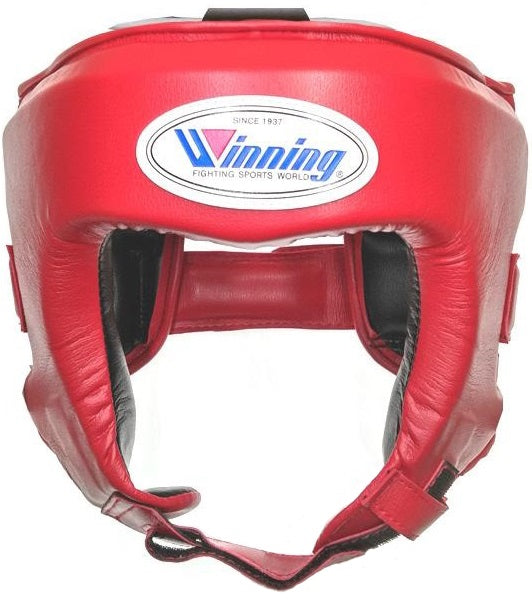
Open Face. Widest field of vision, lightest weight, least facial coverage. Required for most amateur competitions because the rules want vision over padding. Best for technical sparring, footwork-heavy work, and anyone who fights tall and uses range. The nose is exposed.
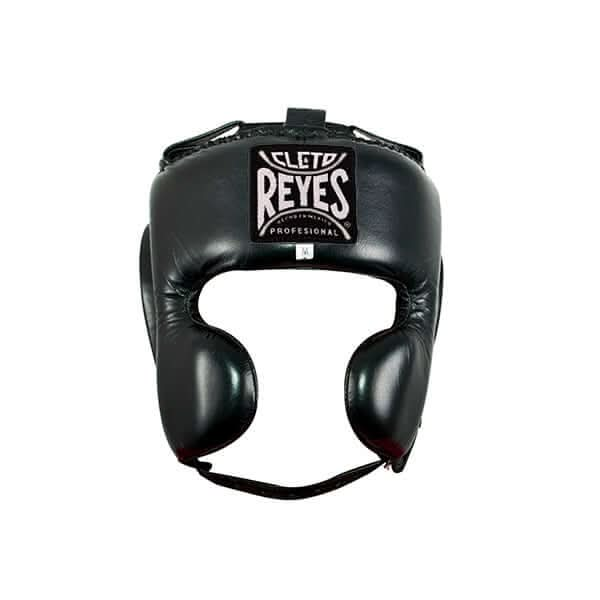
Mexican Style. Cheek protectors and a forehead pad. Standard for gym sparring. Protects the cheekbones, temples, and most of the orbital bone. Slight vision reduction on the lower outside angle. You will feel it on lead hooks until you adjust. The “channel” between the cheek pads matters. Too wide, the jab still finds the nose. Too narrow, peripheral vision suffers. There is no industry-standard width here, but a quick test works: try the gear on and throw a slow jab at a mirror. If your knuckles can travel cleanly between the cheek pads to your nose, the channel is too wide.
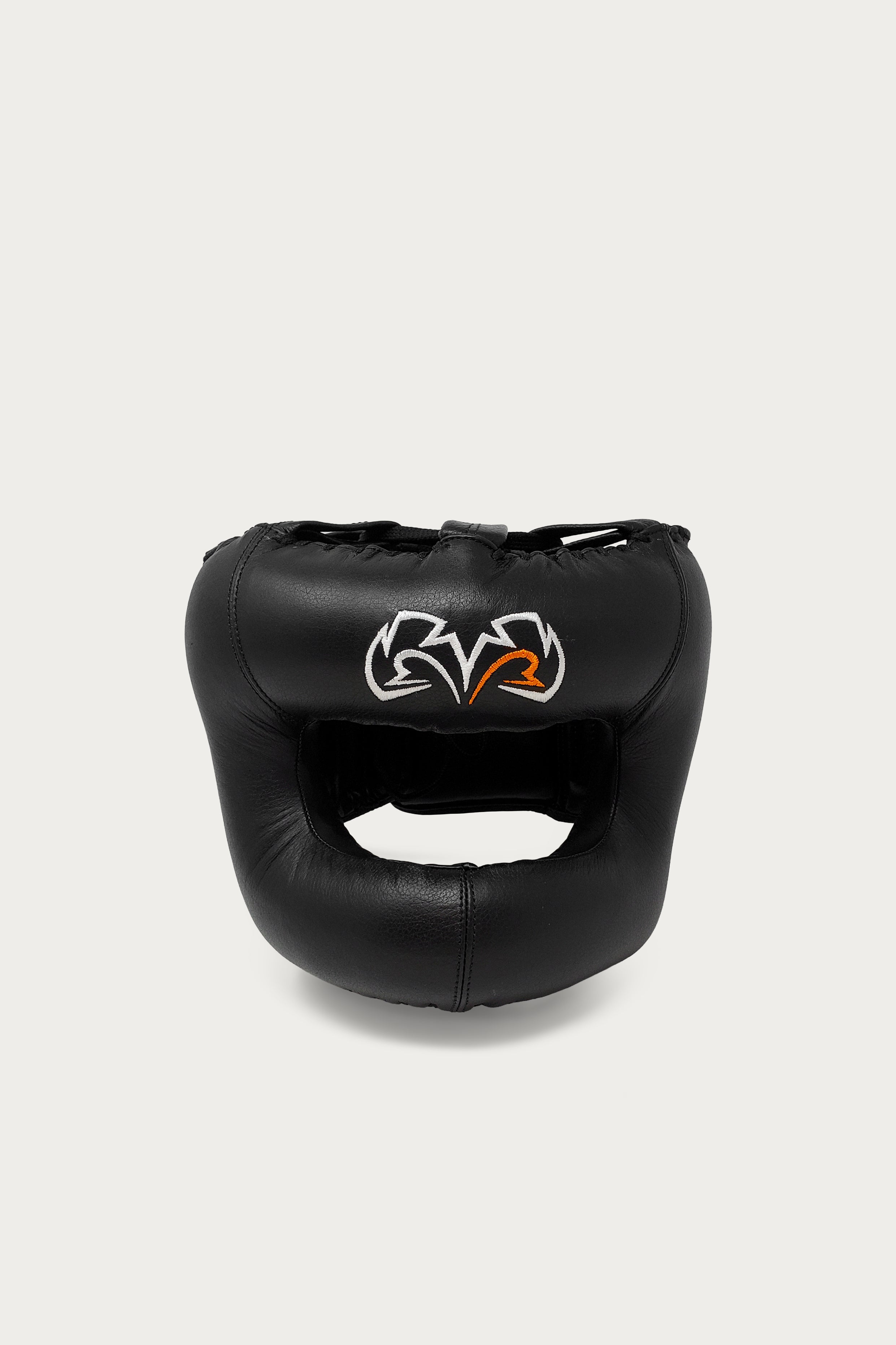
Face Bar or Full Face. A bar across the nose, sometimes with full cheek and chin coverage. Heavy. Vision is meaningfully reduced. The right call when protecting a healing injury, when defensive instincts are still developing, or when sparring much heavier partners. Not for competition.
Step 4. Sizing and the shake test
This is the part most people get wrong, and bad fit is more dangerous than less padding. Headgear that shifts during a combination can block vision in the exact moment it is needed.
How to measure: flexible tape, one inch above the eyebrows, level above the ears, all the way around the skull.
| Size | Inches | Centimeters |
|---|---|---|
| Small | 20.5 to 22.0 | 52 to 56 |
| Medium | 22.0 to 23.5 | 56 to 60 |
| Large | 23.5 to 25.0 | 60 to 63 |
| XL | 25.0+ | 63+ |
These are typical ranges. Brands run differently. Winning fits smaller than Rival, while Cleto Reyes runs longer in the skull. Always check the manufacturer's chart.
The shake test. Strap it on, lace and cinch it down, then shake hard left to right and up and down. The headgear should move with your skin, not over it. Any slide means the lining is not gripping or the closure is not tight enough. Suede and microfiber grip best. Smooth leather is faster to clean but slides more once sweat starts.
Step 5. Materials, without the marketing
Most modern headgear uses multi-layer laminated foam. Typically two to four layers of varying density. The outer layer disperses initial impact, inner layers absorb shock, and the layer against the skin is softer for fit. There is no single industry standard for the number of layers. Quality construction matters more than the marketing terminology.
Standard foam: EVA and PU are passive. They compress linearly under impact. To protect more, they need to be thicker. This is most gear at most price points and it works fine.
Non-Newtonian materials: D3O, Poron XRD, RHEON are rate-sensitive. In their normal state these materials are soft and flexible, but on impact the molecules briefly lock together to absorb and dissipate energy. D3O dissipates impact energy and reduces force transmitted compared to standard foams. The practical advantage: protection at a thinner profile, which means less weight and less vision obstruction. Found in premium gear from Rival Intelli-Shock, some Hayabusa lines, and others.
The honest catch: non-Newtonian inserts add cost and can run hotter in long sessions. They are not magic. They are a real, measurable improvement on standard foam, but they do not change the fundamental physics of brain injury.
Lining matters more than people think. Suede and microfiber grip the skin and stay anchored. Smooth leather is hygienic and faster to clean. Better for shared club gear. For personal use, suede wins.
Step 6. The small details that separate good from great
A few things to check before buying:
- Ear coverage with a cross-bar over the ear hole. Direct shots to the ear without this can damage the eardrum. Most quality headgear has it. Cheap headgear sometimes does not.
- Crown closure. Laces give the most precise fit on the top of the skull. Velcro is faster and adequate for most users but loosens over time.
- Chin strap. A buckle is more secure than a Velcro tab. Velcro tabs come loose during clinching, and chin straps are not the place to cut corners.
- Ventilation. Long sparring sessions are a heat problem. Look for visible airflow channels, not just claims of “breathable.”
Step 7. When to replace your headgear
Foam compresses with every impact, and it does not fully recover. After roughly 18 to 24 months of regular sparring, or 100 to 150 rounds of hard work, the protective foam in even premium gear has degraded measurably, even when the leather still looks fine. If the padding feels softer than it did new, if it is visibly thinned, or if it has been more than two years of regular use, replace it. This is the most underrated piece of advice in the sport.
Budget tiers and our top picks
Entry: $50 to $100. Solid for gym sparring and light competition. Single or dual-density foam, basic construction. Start with the full headgear catalog and filter by price.
Mid-tier: $100 to $200. Where most serious gym sparrers should land. Multi-layer foam, better leather, real lining. See the sparring headgear options.
Premium: $200+. Non-Newtonian materials, premium leather, hand construction from brands like Winning, Cleto Reyes, Rival, and Fly. This is the diminishing-returns zone, but for four-times-a-week sparrers, the comfort and durability pay off.
Three specific picks worth attention right now:
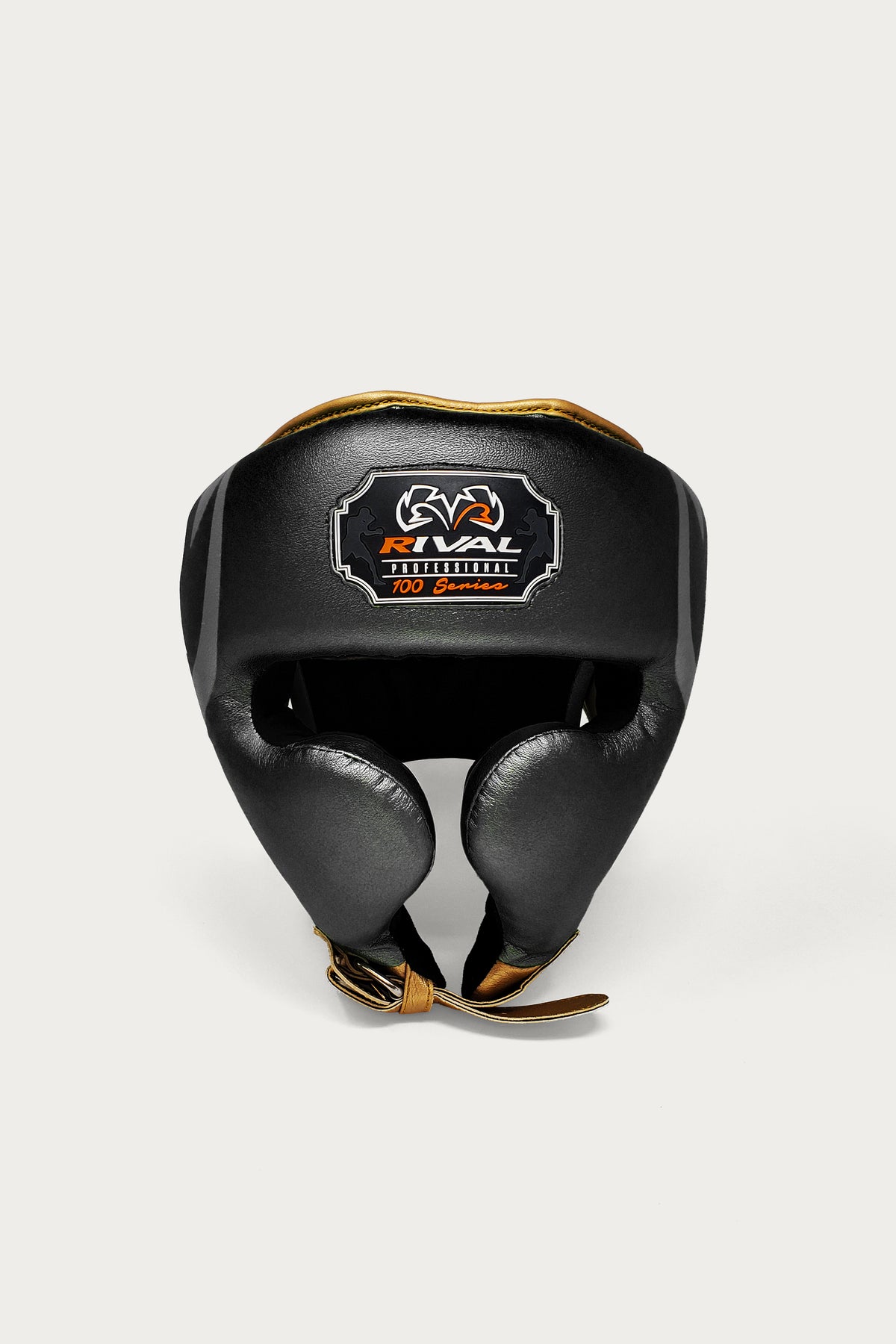
- Best for sparring: Rival RHG100 Professional. Multi-layer construction, strong cheek coverage, and a serious sparring fit.
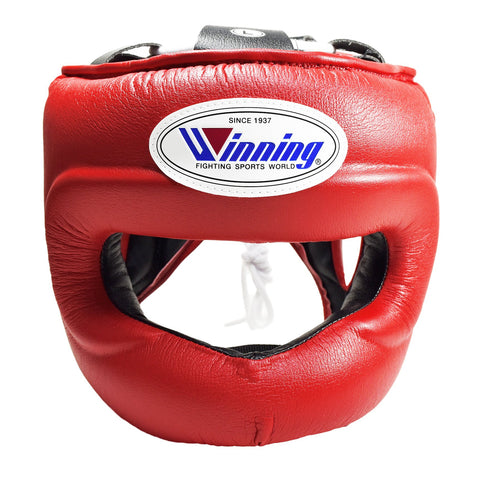
- Best for maximum protection: Winning FG-2900. The full-face benchmark for fighters who prioritize protection over price.
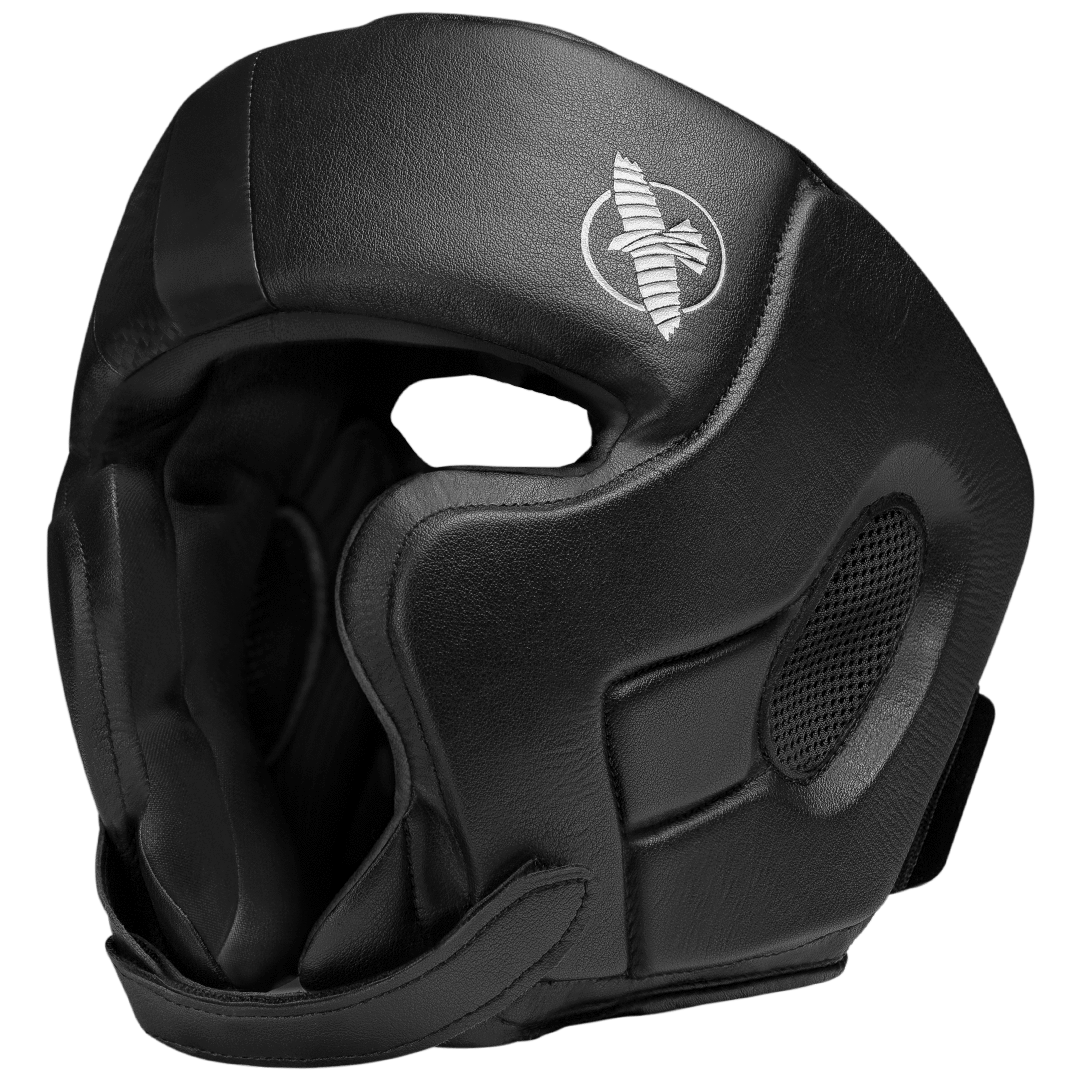
- Best value: Hayabusa T3 Boxing Headgear. Reliable sub-premium construction, dual-density foam, and smart strap design.
The lab verdict
For most readers, gym sparring with no competition aspirations, a Mexican-style headgear with suede lining in the $100 to $200 range is the right call. Enough protection for hard sessions, vision wide enough to see what is coming, and a fit that locks down with the shake test.
For competition: buy for your division. The right approval label is non-negotiable. Everything else is preference.
For everyone: replace it when the foam dies.
Recommended headgear to compare
Use these as starting points, then compare style, visibility, protection coverage, and price against your actual sparring needs.